What It's Like Building an App When The World is Against You: The Story of TextCeleste
"Just a girl with wifi and trust issues. Try my app guys!!"
Earlier today, I opened Instagram to find a suspiciously beautiful influencer touting an app that offered to “draw my soulmate” using astrology. A quick glance at the bio confirmed the “girl with wifi and trust issues” was an AI construct backed by millions in marketing from men I’d wager have zero expertise or respect for the 4,000 year old craft.
If you, like me, are someone who enjoys astrology, I bet you’re also sick and tired of products that fundamentally assume our interest is frivolous – stupid even – and therefore easy to exploit.
Two years ago, I set out to build something different. Something I’d dreamed of creating since designing my first AI chatbot back in 2015, when astrology was still a hobby I kept closeted so my engineering colleagues would take me seriously.
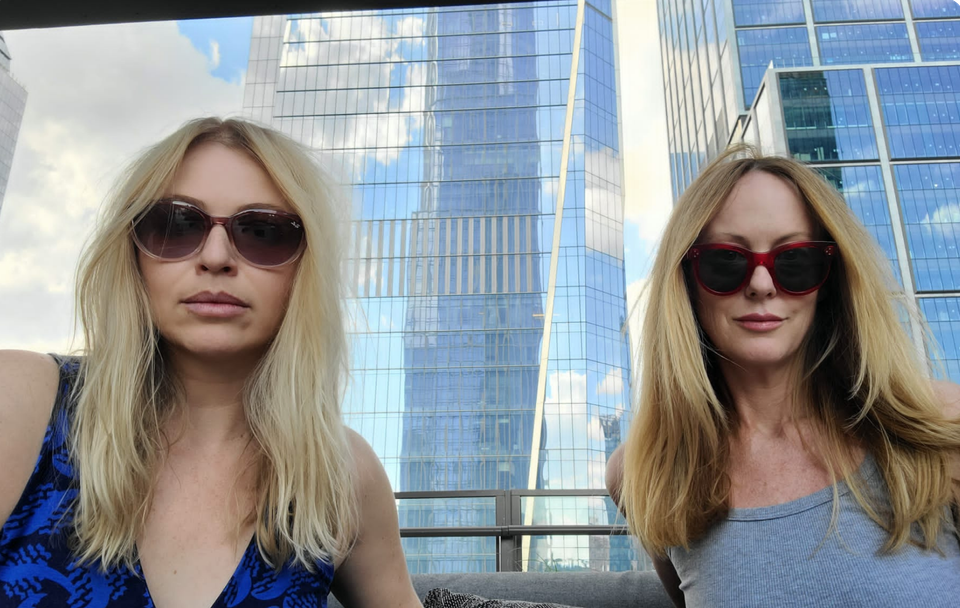
TextCeleste is an app that gives readings that invite you to think, reflect, and grow. But it is also a triumph of resilience from my tiny team.
Despite our deep experience in astrology and AI, bringing this product to market has been nothing short of a Herculean feat. We have faced gatekeepers at every turn; gatekeepers who questioned our integrity and threatened our sanity. And now, we need you to know our story, because we’ve fought tooth and nail to give smart people – especially smart women who care about enrichment through introspection – the product we deserve.
The Gatekeepers of Capital
“We love the idea of making money off gullible women.”
People spend billions of dollars every single year on astrology services. So when generative AI exploded, it was only a matter of time before the App Store would be hit with a tidal wave of hot garbage.
My co-founder Lauren and I wanted to beat the inevitable cash-grabs to market with a killer product. To do that, we believed we needed outside capital. Given our credentials – she is a Harvard-educated genius who started one of the earliest and biggest chatbot companies in the world, and I started and sold an AI company of my own before we teamed up – we assumed raising money would be a piece of cake.
We were wrong.
I have too much PTSD to dig up our old tracking spreadsheet to tell you exactly how many VC firms we pitched. I know it was over 100. None panned out, but the experience gave us something money can’t buy, which is freedom from nonsense like this:
"We love the idea of making money off gullible women!" — A real quote. From a real investor.
"This looks a lot like [Redacted App Name], which I invested in at the seed round. Good luck!" — A well-known founder-turned-investor, referencing a period tracker. (I wish I were joking.)
“Ultimately, one of our partners shut this down. Sorry!” — An investor who strung us along for months but was unable to convince his boss astrology is different from gambling or porn.
There is so much more where this came from. And while we can now look back and laugh, there were some seriously demoralizing moments. Still, I stand by what I said: our failed fundraising era, while painful and all-consuming, gave us the bitter pill we needed to roll up our sleeves and build the thing ourselves.
The Gatekeepers of the App Store
“We have enough fart, burp, flashlight, fortune telling, dating, drinking games, and Kama Sutra apps, etc. already.”
With no VC meetings to distract us, we managed to build an AI that could read a chart. Initially, it was just a website, but we knew we needed an iPhone app, so we shifted our limited engineering resources toward that milestone.
By the time the app was complete, we already had a handful of early supporters using it, and their feedback was overwhelmingly positive. The future was looking bright! Until we submitted it to Apple for approval. We were swiftly informed via a generic rejection notice that the App Store already had enough “fart, flashlight, and fortune-telling apps.”
Obviously, we appealed. This led to a video call I can only describe as disastrous, in which an increasingly hostile Apple representative advised us to go forth and build a completely different app if we wanted in, informing us they would refuse to so much as evaluate anything focused on astrology. When we brought up a couple of seemingly new astrology apps in hopes of being told what they did to get through, we were told to give up on the category entirely unless we wanted our developer account banned for life.
This nearly broke us. More and more people were using our website, but everyone had the same ask: “When will there be an app?”
Then it hit us: many people we talked to who enjoy our website also enjoy psychological frameworks, like The Enneagram and Myers-Briggs. And the online assessments for these systems are agonizingly long, boring, and often inaccurate. We had stumbled on an opportunity to engineer our AI to utilize these beloved frameworks, making TextCeleste even more insightful while appeasing the powers that be over at Apple.
Executing that plan wound up taking far longer than we anticipated, but it worked.
The Gatekeepers of the Craft
"Please believe me when I say that AI generated astrology is not in alignment for us."
Building independently meant we needed allies, and the community of professional astrologers seemed like a logical place to start. Our pitch was simple: “The era of AI Astrology is here, and we are AI experts and practicing astrologers. We need your help to preserve the craft.”
The responses were less than promising. Some were amusing, like the astrologer who wanted a $3,000 "partnership fee" just to hop on a Zoom. Others were hostile, viewing any AI—no matter how small or human-led—as an environmental disaster designed to replace human connection. And then there were the “stress-testers,” who lobbed questions on 12-century chart-reading techniques no one would ever ask – and most professional astrologers would struggle to answer – and then declared our AI unfit to replace the masters.
But we were never trying to replace human astrologers; we were trying to give the rest of the world who couldn’t afford regular readings a bridge to their wisdom.
Thankfully, we found Dr. Jennifer Freed. As a best-selling author and psychological astrologer, Jen saw past the "AI vs. Human" binary. While others saw a threat or a paycheck, she saw a self-discovery engine that could meet people where they are. She became the advisor and coach we desperately needed. If chatting with TextCeleste brings people even a fraction of the peace, clarity, and vision she has given us, we will have succeeded in our mission.
The Final Boss
“Trained by leading experts, this app helps you better understand yourself, how you relate to others, and the timing of your life.” – GOOP
With Jen as our champion, we secured even more early customers and brand partners–many of whom tirelessly provided feedback, and couldn’t stop raving about the product. By the time TextCeleste hit the App Store, we had successfully built something people loved.
But now we have to figure out how to tell more people about it, and somehow, on a shoestring budget, manage to rise above the noisy, exploitative grifters. And that’s where you come in.
If a self-discovery engine built by people who respect your intelligence sounds like the product for you, we’d love for you to try TextCeleste. And if you love it, please shout it from the rooftops.
Go beyond your horoscope. Try a free, personal reading today.